CT Progressive Democrat

News and Views from CT State Representative David McCluskey / Democrat - West Hartford

Friday, July 10, 2009

Health Care Consumers & Advocates / Electronic Health Records

On Monday, July 20th @ 10am in the Legislative Office Building, Room 1C, Hartford, there will be a forum for health care consumers and advocates concerning the privacy & security of electronic health records and health information exchanges. The Speakers will be Kevin Carr, MD, Trusted Medical LLC and Scott Cleary, ehealthConnecticut.

For more information, call Toll-Free 1-888-873-4585 or information@cthealthpolicy.org. Sponsors: eHealthConnecticut, the CT Health Policy Project and AARP CT.

Hartford Happenings in the Summer

SATURDAY, JULY 11
Riverfront Recapture: Mortenson Riverfront Plaza www.riverfront.orgRiverfest 2009:
Live bands, musicians, clowns, kids activities, fireworks and more.starting at 4 pm, raindate July 12

HartBeat Ensemble: Elizabeth Park
www.hartbeatensemble.org
Plays in the Park: 4th Season of the popular outdoor
Summer play series.
starting at 4:30 pm

ArtSpace : 555 Asylum Ave
w.angel@snet.net
Quad Vision: Rick Wilkinson, Linda Lewis, Jean Wilhern & Karen Wassmer
A unique mix of sculpture, paintings, photography and more.....
5 - 9 pm


Harriet Beecher Stowe Center: 77 Forest St.
www.harrietbeecherstowecenter.org
Salons at Stowe: 21st-century parlor conversations.
Topic: Gardens and Hunger in Connecticutwith Gloria McAdam, Food Share & Jane Gottier, Westmoor Park.5 - 7 pm

Wadsworth Atheneum Museum of Art: 600 Main St. www.wadsworthatheneum.org
Film: Our City of Dreams, Documentary about 5 women artists ( Nancy Spero, MarinaAbramovic, Kiki Smith, Ghada Amer and Swoon) living and working in New York City.at 5 pm

SUNDAY, JULY 12

Wadsworth Atheneum Museum of Art: 600 Main St.
www.wadsworthatheneum.org
Film: Our City of Dreams, Documentary about 5 women artists ( Nancy Spero, Marina
Abramovic, Kiki Smith, Ghada Amer and Swoon) living and working in New York City.at 5 pm

HartBeat Ensemble: Sigourney Square
www.hartbeatensemble.org
Plays in the Park: 4th Season of the popular outdoor Summer play series.
starting at 4:30 pm

MONDAY, JULY 13

Monday Night Jazz: Bushnell Park www.hartfordjazzsociety.com Dezron Douglas / Lummie Spann QuintetStarting at 6 pm Rain ? move to Asylum Hill Congregational Church

For More Free Events go to www.letsgoarts.org and look under " Fill your Social Calendar".The Greater Hartford Arts council has put together this great resource to find events.You can even do a "free" search !

Wednesday, July 08, 2009

Pope's Encyclical on Global Economy Supports the Principles of the Employee Free Choice Act

Unions important “today even more than in the past,” says Holy Father

Washington, DC – Catholics for Working Families (www.catholicsforworkingfamiles.org), a coalition of Catholic organizations formed to help pass the pro-union Employee Free Choice Act, today welcomed Pope Benedict XVI's new encyclical Caritas in Veritate. The document contains a bold critique of unregulated free market capitalism and reiterates unequivocally the Catholic Church’s longstanding support for labor unions and the central role they play in ensuring workers' rights and just economic development.

The Employee Free Choice Act will remove legal barriers to union organizing and negotiations by setting up a simpler and more democratic process by which workers may choose to form unions, requiring mediation in cases of first contract disputes, and imposing stricter penalties on employers who violate existing workers' right protections. The legislation and Caritas in Veritate share a common recognition that workers have an inviolable right to organize, and that employers ought to treat their workers with dignity and respect.

“The rise of globalization has coincided with a widening gap between wealth and poverty, and a steady decline in U.S. union membership. Pope Benedict's new encyclical reminds us that these sea-changes in the global economic order are not unrelated,” said Dr. Joseph Fahey, professor of religious studies at Manhattan College and chair of Catholic Scholars for Worker Justice. “In light of the pope’s reaffirmation of the importance of labor unions, we ask our fellow Catholics, especially those in the business community, to join us now in calling for the passage of the Employee Free Choice Act.”

According to Pope Benedict:
“The repeated calls issued within the Church's social doctrine, beginning with Rerum Novarum[60], for the promotion of workers' associations that can defend their rights must therefore be honoured today even more than in the past, as a prompt and far-sighted response to the urgent need for new forms of cooperation at the international level, as well as the local level.”


Each year, thousands of U.S. workers are subjected to illegal harassment and intimidation by employers who exploit lax penalties and other deficiencies in existing labor laws in order to prevent their employees from organizing. Countless more union members are trapped in bitter and unproductive contract disputes by employers who refuse to bargain in good faith. The Employee Free Choice Act will help remedy these abuses by preventing what Pope Benedict terms efforts to “limit the freedom or the negotiating capacity of labour unions.”

“I have seen firsthand the lengths to which some employers will go to prevent workers from exercising their legal and moral right to form a union – threatening, intimidating, and even firing workers who attempt to organize,” said Chris Korzen, a former health care union organizer and now executive director of Catholics United. “Passing the Employee Free Choice Act is the best way to protect workers from violations like these and to answer the pope's call for increased support of organized labor.”

Pope Benedict also called on unions to “turn their attention to those outside their membership” and become more active participants in the broader struggle for justice. Many unions in the U.S. have already embraced this role, notably those who are currently investing heavily in the upcoming legislative push for universal healthcare. The Catholic Church regards health care as a basic human right.

Several Catholic senators have not yet taken a position on the Employee Free Choice Act, including Mary Landrieu (D-La.), Susan Collins (R-Maine), and Lisa Murkowski (R-Alaska). The U.S. Senate is expected to vote on the legislation before the August recess.

For more information:
Caritas in Veritate: http://www.vatican.va/holy_father/benedict_xvi/encyclicals/documents/hf_ben-xvi_enc_20090629_caritas-in-veritate_en.html.

The Employee Free Choice Act: http://www.americanrightsatwork.org/employee-free-choice-act.
Catholics for Working Families: www.catholicsforworkingfamilies.org.


About Catholics for Working Families:
Catholics for Working Families is a project of Catholics United, with support from Catholic Scholars for Worker Justice, Catholics in Alliance for the Common Good, and Pax Christi USA.

Tuesday, June 30, 2009

1000 Friends of CT Annual Meeting

On July 21st from 5-7pm @ the Hartford Public Library, 500 Main Street, Hartford, 1000 Friends of Connecticut will be having its annual meeting. Featured Speaker is Hartford Courant columnist Tom Condon.

Space is limited. Please RSVP to info@1000friends-ct.org or (860) 523-0003.

Wednesday, June 17, 2009

Thursday, July 23rd, 5pm @ the Harriet Beecher Stowe Center

On Thursday, July 23rd, 5pm at the Harriet Beecher Stowe Center, 77 Forest Street in Hartford, there will be a forum entitled:

"Reclaiming Hartford's Neighborhoods". Presenters will be Ken Johnson from the Northside Institutions Neighborhood Alliance (NINA) and Tom Condon from the Hartford Courant.

Admission is Free. To RSVP, call 860-522-9258 ext. 317 or info@stowecenter.org.

Monday, June 08, 2009

Building America's Future - Transportation

NYC Mayor Mike Bloomberg, Pennsylvannia Governor Ed Rendell and California Governor Arnold Schwarzenegger have founded a coalition called Build America's Future to make our country's infrastructure a top priority. Their website is http://investininfrastructure.org/.

The American Society of Civil Engineers (ASCE) graded the nation’s infrastructure in 2005, providing both letter grades as well as detailed needs assessments. Overall, the ASCE gave our infrastructure system a “D” grade and estimated that the nation’s total infrastructure funding needs over a five-year period approached $1.6 trillion.


The Group has just released a memo calling on Congress & the Obama Administration to make transformative changes and chart a new transporation vision as Congress prepares to revise the federal transportation program - SAFETEALU.


“Our nation’s current transportation system is simply outdated and unable to meet the demands of the 21st Century,” said Kerry O’Hare, policy director of Building America’s Future. “We cannotcontinue to channel billions of dollars through the same old programs which lack innovation, accountability and an outcome‐driven focus. The country is hungry for change and Congress and the Obama Administration have a unique opportunity to transform current transportation programs and enhance our nation’s economic competitiveness and improve the quality of life for all Americans. The time to act is now and Building America’s Future stands ready to help build the political consensus to make this vision a reality.”

Included in the memo were four key principles to use in shaping this new transportation vision.
Excerpts:


1. Renew Leadership at the National Level
To ensure that America has a 21st century transportation system that meets our 21st‐century needs,
the federal government must once again lead, by outlining key national goals that will guide how
transportation investments are made in the coming years…


2. Increase Accountability at the Federal, State, and Local Levels
Federal transportation funding is no longer guided by clear objectives. Rather, funding decisions
today are based more on politics than on merit. For example, the number of earmarks in surface
transportation bills has ballooned from 10 in 1981 to over 6,000 in the 2005 transportation
authorization. While not all of these earmarks involved funding “bridges to nowhere,” a politicized method of distribution increases the risk of funding inefficient projects that do not meet national objectives… In laying out a vision for a new national transportation policy, we challenge Congress to significantly reduce earmarking and offer alternate routes – with greater transparency and accountability – to achieve national goals… Congress and the Administration must begin to hold states and localities – and themselves – accountable for ensuring that federally‐funded projects meet national goals and that taxpayer dollars are being used efficiently. Otherwise, it will simply be business as usual – and that is no longer acceptable.

3. Encourage Innovation and Flexibility at the State and Local Levels
In recent years, the federal government has begun to allow states and local governments greater flexibility in how they spend their resources, leading to increased innovation in meeting national
transportation objectives. The next transportation bill should significantly accelerate this
development, through streamlined processes as well as expanded financial incentive programs,
such as the Urban Partnership Program…


4. Find New Ways to Fund National Goals
The American Recovery and Reinvestment Act (ARRA) is a critical down payment on our country’s backlog of transportation capital needs. But much more needs to be done to address both that backlog of capital projects as well as ongoing and future operations and maintenance costs. If we are truly going to address our nation's transportation needs in the size and duration required, we need ongoing and stable streams of revenue that are dedicated to transportation…


Read the full memo at: www.investininfrastructure.org.

Monday, August 11, 2008

Hartford Courant Editorial on Full-Time Lawmaking is Sophomoric

I know you are not supposed to attack those who buy paper and ink in bulk, but today's Hartford Courant Editorial on Full-Time Lawmaking is amateurish and not worthy of our state's "Paper of Record" [N.B. I don't know if Zell sold this title off when he pink-slipped a large number of the Courant's writers].

The Editorial admonishes the General Assembly to do the Public's work on time. OK. Fine. Now just what is the General Assembly suppose to do in three and five month sessions? 1) Adopt state budgets - our primary responsibility. 2) Enact new laws, modify/repeal old laws. 3) Conduct oversight/review of the Executive/Judiciary Branches. We are obliged to do these things with public imput and imput from the Governor and her state agencies. This takes a significant amount of time within our regular sessions.

The principal criticism seems to be that special sessions run up the cost of government. So what percentage is the General Assembly's TOTAL budget in comparison to the overall state budget? - less than 2%. So an argument about the cost of special sessions is ludicrous. Executive branch agencies like DSS & DCF waste the cost of a special session on a good day/week. One court case/consent decree can pay the cost of having a year-long special session. I could argue that if the General Assembly, or a portion of it, met year-round scandals in the Executive/Judicial Branches MIGHT be reduced and the delivery of state services MIGHT improve. No guarantees, but I believe the biggest failure of the General Assembly is oversight. I think recent state government history well-documents this belief. Oversight takes time/resources/staff.

Within a three/five month session, much time is given over to the public hearing/deliberation process. All bills must have a public hearing; they must be deliberated in committee and then other committees may review them before the full House & Senate take action on them. Democracy does not equal efficiency. The House also has a tradition of unlimited debate - the Question is never called and a Representative may speak on a bill on three seperate occasions without the permission of the Assembly. My experience with this tradition has been mostly positive. We have killed bad bills this way and made good bills better - often because the Minority Party has found flaws in the legislation. In addition, under our state constitution, bills not enacted in the first year of our two year term die on the House or Senate Calendar and have to go through the entire public hearing/legislative process in the second year. This is inefficient, but it does have the effect of reducing somewhat the volume of bills we deliberate.

Have I reached the conclusion that CT needs a full-time General Assembly? NO. I think there are a lot of negative consequences of having a legislature in session full-time. However, telling the General Assembly to be more efficient without any serious reflection on the constraints of the current legislative process and without any substantive recommendations is sophomoric and unhelpful.

Tuesday, July 29, 2008

2009 presents an historic opportunity to mak health care happen and Today, Families USA is kicking off a brand new action project called Stand Up for Health Care -- with the goal of persuading elected leaders to provide quality and affordable health care for all.

The Stand Up for Health Care website is : www.standupforhealthcare.org

Sunday, March 23, 2008

The future of the UCONN Health Center - What's in the Public's Interest?

The UCONN Health Center is in tough financial straits and has an old, small hospital. Prior to 1997, the federal government funded teaching hospitals like John Dempsey so well that the Health Center used the extra revenue to fund its academic & research programs. Since the federal Balanced Budget Act of that year, the Health Center's finances have been precarious. There was a bailout of the Health Center in the early 2000s, but no systematic increased state support for its academic and research programs.

As a result, the Health Center last year came up with the idea of building a much bigger hospital whose revenues would be used to subsidize the academic and research activities. This caused, understandably, strong opposition among the non-profit hospitals in the Greater Hartford area. Most of these hospitals are in precarious financial circumstances themselves and they viewed a bigger John Dempsey Hospital as draining more of their profitable, private pay patients from the wealthier suburbs.

There are several options offered by the CT Academy of Science and Engineering (CASE) to address the Health Center's need for a replacement hospital. But the CASE report also stressed the continuing need of state support for the Health Center's academic & research programs. I believe that the Executive Branch whether OPM, DSS, the Office of Health Care Access should be directly involved in the recommended negotiations between the Health Center and the Greater Hartford non-profit hospitals on how a replacement hospital on the grounds of the UCONN Health Center should be set up and administered.

The UCONN Health Center and the John Dempsey Hospital have really not significantly assisted the state in solving its health care problems - whether smoking cessation, the need for more doctors & dentists to take HUSKY patients, child obesity, etc. Partly, this is the fault of the General Assembly. Most of the oversight of the Health Center has been by the Higher Education Committee and the Higher Education Subcommittee of Appropriations - not the Public Health or Human Services Committee (the latter handles the DSS administered HUSKY program). We need to put the Health Center & Hospital on solid financial footing, but in doing so we must see whether their missions need to be more focused on addressing the state's public health needs.

For example, we could stabilize the UCONN Health Center's finances by directing a portion of the annual Tobacco Settlement money there. In exchange, the Health Center could provide smoking cessation and other smoking related health services to Medicaid recipients (the reason CT got the Tobacco Settlement $ was the costs to the Medicaid program caused by smoking).

UCONN Health Center and John Dempsey Hospital are public assets. In whatever the state does to address their finances, the need to protect and advance the interests of the public must be the utmost priority.

Funding Non-Profits Smarter

There is no doubt that the Executive Branch and the Legislature have seriously underfunded the non-profits organizations which provide so many social and other services to CT residents.

The increases they have received in the last decade or more are below the inflation rate and far below the increases in health insurance and energy costs. They are in dire shape. But to really address this issue in a thoughtful, long-term way we need to do much more than just give them money. As a practical matter, given the state's spending cap and the other demands on state dollars, CT can not give the non-profits the kind of increases in funding they need to stabilize their operations. We need to fund them smarter. We need to assist them with their cost drivers such as health care and energy and incentivize them into working together/consolidating back-room operations/expenses whenever possible.

For example, the state subsidizes a big variation among the non-profits concerning health insurance. Some non-profit employees are on the state's HUSKY program because their non-profit can not provide affordable, comprehensive health insurance. Many are simply too small to get private health insurance at a reasonable cost. Other non-profits provide decent health insurance, but are hard-pressed. They must ask employees for higher co-pays and premiums or little to no wage increases in order to do so.

Instead, since many of these non-profits mostly/exclusively provide state services with state funding we should find a way to bring them into the state employee health care pool. Candidly, this is easier said then done because of the diversity of the non-profit community and the variation in health insurance they provide and how much it costs them. But if we can find a way to do so, we can provide them with decent health insurance at an affordable price. The state employee plan (actually, there are several plans provided by several private health insurance companies) is comprehensive and has not had the huge annual increases that non-profits have faced. If the non-profits which can not afford health insurance for their workers, this will allow them to attract and keep good employees. For those which already provide decent health insurance going into the state health insurance pool should allow them to do so at a lower cost and/or with lower annual increases.

The State should also use its purchasing power to assist non-profits with their energy costs. Again, since these non-profits are providing state services with state dollars, the State is already, albeit indirectly, paying for their energy costs - just very inefficiently.

However, before we assist them with the capital costs of weatherization, getting more efficient lighting and heating infrastructures, etc. we need to get more information on the non-profits. Are there too many stand-alone buildings? Are they in the right locations? Can multiple non-profits be co-located to save money and provide better services to the state resident they serve? We don't know the answers right now. The Departments of Developmental Services, Mental Health & Addiction Services & Social Services should assess all the non-profits they fund and share the information among them to figure out the best way to proceed.

Finally, we should incentivize non-profits to combine non-direct care services whenever possible.
Personnel, Legal, Custodial, Repair and even Executive Director services may be able to be shared among non-profits especially if we can get them to co-locate. We are subsidizing a lot of costly inefficiency.

Does that mean every non-profit can be co-located have all its back office operations shared with other non-profits? Of course NOT. For some services provided for some state residents this may be inappropriate, inefficient or unacceptable. But, we won't know until we ask the questions and challenge the non-profit community.

Just like we must incentivize municipalities and boards of education to share services between and among them to achieve economies of scale whenever possible and appropriate, we must do so with the non-profit community. We can not afford to do otherwise.

Wednesday, January 02, 2008

The first empirical study of the social and economic impact of multi-use trails in the Farmington Valley was recently completed by the Farmington Valley Trails Council. Below is the conclusion of the study. For a complete copy of the report, contact R. Bruce Donald, President of the Farmington Valley Trails Council: president@fvgreenway.org.

Conclusions

Comparing and contrasting other studies to the results of the Trail Utilization Study Analysis of the Farmington Canal Heritage Trail, Simsbury, Connecticut provided an opportunity to verify the economic impacts on the regional economy. In a full cycle of seasons covering a year, the trail attracted 110,000 visits and generated conservatively four to almost seven million dollars in revenues for Simsbury and the Farmington Valley of Connecticut. Additionally, it is a proven fact that home values rise and sales quicken when adjacent to a bike trail.

However, there is much more than just economic value in the trail system that encompasses the FCHT, (which is part of the East Coast Greenway) and the Farmington River Trail. There is the obvious health and recreational benefit. There is a very real boost to the towns involved which are able to provide such an amenity. Local residents are proud of their trail system, not only for themselves and their health, but as an advertising feature for the tourism industry of the area. The Farmington Valley Region is full of history, culture, and scenery. This group of both suburban and more rural communities has always been an attractive tourist attraction for people from all over the country to visit. The multi-use trail system however, is proving to be a huge draw. These linear greenways built on unused railroad corridors now play an important role in connecting communities. They certainly enable users to access the area on foot or bike and explore the scenic and historic landmarks. But perhaps more importantly they allow commutation to and from work, and the ability to undertake short trips in safety for the user and the environment. The trail system within the Farmington Valley can truly now be called a proven resource that enhances the region in many positive ways.


Thursday, December 27, 2007

New Internet Tool for Executive Pay Comparisons

Last week, the Securities & Exchange Commission launched its first-ever on-line tool that enables investors to compare what the top executives of the 500 largest American companies get paid. The Executive Compensation Reader builds on the SEC's new requirements that went into affect this year to enhance clarity and completeness of executive compensation disclosure.


http://www.sec.gov/xbrl

Friday, December 21, 2007

A new study recently released by John Logan, a lecturer at the London School of Economics, points out that the intensity of employer opposition and government hostility to collective bargaining in the United States is unique among developed nations.

This “repressive character of U.S. labor law, which allows free rein to anti-union employers,” not only hurts workers in the United States and in other nations, Logan said today.


There is growing evidence that consultants, employer groups and multinational corporations are exporting U.S.-originated anti-union strategies to other developed countries such as the United Kingdom and Ireland and to transforming countries such as China.

Strengthening the right to organize and bargain collectively through the Employee Free Choice Act would benefit not only American workers, but also workers in other nations.

Logan’s report,
Unions Facing Hard Times: The Global Crisis in Union Collective Bargaining, shows that Sweden has the highest rate of union membership with 80 percent, while the United States trails at the bottom with 12 percent. Click here to download a copy of the report (PDF).

Thursday, December 13, 2007

LETTERS TO THE EDITOR
Hartford Courant
December 13, 2007


Airport Congestion Creates Opening

Connecticut has a great opportunity to take advantage of air-traffic congestion problems around New York and New Jersey airports — if we act boldly by expanding air service from Bradley International Airport and build a rail link to the airport from the Springfield-to-New Haven line.

There is simply too much air traffic for JFK, LaGuardia and Newark airports to handle. All suffer from chronic flight delays. Instead of trying to increase the number of flights at these busy airports, the effort should be to reduce the demand. One way would be to increase air service from Bradley.

Now that Bradley has international service, we should try to grow the business and attract more travelers from New York and New Jersey. We can do this most effectively by running a rail line to Bradley and start running trains from Manhattan to Bradley. Not only would this make it convenient for New York and New Jersey airline passengers to get to Bradley, we would make the region more attractive to the business community by providing a one-seat, less-than-two-hour train ride from Bradley/Hartford to New York City.

David McCluskey State Representative D-West Hartford
The writer is co-chairman of the General Assembly's transportation bonding subcommittee.

Friday, August 10, 2007

CT should lead & create a NY/NY/New England Commuter & Freight Rail Authority

I commend Governor Rell for exploring the opportunity of running commuter rail service into Penn Station, NYC. Our main challenge is getting cooperation from AMTRAK, which operates Penn Station and owns the Hells Gate Rail Line from the New Haven Line into Penn.

The advantages of having such service are many. It would allow CT commuters easier access to the west side of Manhattan which is targeted for significant growth. More significantly, we could use existing rail cars/locomotives such as those which run on the New Jersey Transit Line - instead of our unique M-8/current New Haven Line rail cars which are the only ones in the world I believe which run on both overhead AC line and third rail DC line. If we could get AMTRAK approval, we could start such a service faster than we will get the new M-8 rail cars from Kawasaki. We should work with our Federal Delegation to aggressively pursue this Penn Station option.

But we need to think even bigger and bolder - a NJ/NY/New England Commuter & Freight Rail Authority to coordinate and accelerate rail development in the region. NJ Transit, the MTA and the Massachusetts Bay Transportation Authority are expanding their rail systems. New Hampshire has just established a Rail Transit Authority to reestablish passenger service to Boston. Connecticut is in the middle of most of this activity and we should move aggressively to connect the dots. Just as the MTA is working on a rail connection to the Stewart International Airport in Orange County - 1 seat, 75 minute trip from Penn Station, we need to get Hartford and its airport, Bradley connected to the rest of this growing rail service NOW. The best way to revitalize Hartford is to connect it to our nation's economic capital - NYC - with a one seat ride in less than 2 hours.

Again, this is not easy since AMTRAK once again owns the rail line from Springfield to New Haven. The line is mostly single track, old, not-electrified and has too many at-grade rail crossings. But CT could take the lead and buy/lease double-decker passenger cars from New Jersey Transit or from one of the manufacturers. Within the next several years, diesel/overhead electric locomotives will be available which will allow a one seat ride from Hartford/Bradley Airport to Penn Station.

Now that Governor Rell has asked Pitney Bowes Chair/CEO Michael Critelli to head a DOT Reorganization Taskforce, CT must step up its efforts to get out of our economic cul de sac by working with our surrounding states in reestablishing our commuter and freight rail service.

Monday, July 16, 2007

Legislature needs to establish a uniform investigatory process

Having served on at least three investigatory inquiries (the CRRA and the Lisa Moody ones in the Government Administration and Elections Committee and the I-84 DOT Construction one in the Transportation Committee), I believe that the General Assembly MUST develop a format to properly do investigations. In most circumstances, this format should be as bi-partisan as possible.

I believe whenever an Executive Branch investigation is authorized, usually by the Chairs of the Committee of cognizance, that a formalized process should kick in. Partisan and non-partisan staff should be specifically assigned to work on the inquiry. The Program Review and Investigations Committee (PRI)'s staff and expertise should be utilized as well as that of the Office of Legislative Research and the State Auditors. Often times, PRI and the Auditors have already done basic reviews of the state agency in question that would help with the inquiry.

Too often the legislators in such investigatory hearing lack the specific knowledge of the agency, how it works and what the normal business practices are in that field (e.g. how transportation construction contracting works). As a result, value time is lost with bringing legislators up-to-speed in the middle of the investigation. The Legislature is supposed to be a check on the Executive Branch, but right now our ability to conduct oversight and investigations is too limited and unfocused.

It MIGHT be the case that the Legislature should revise the mission of the Program Review and Investigations Committee so that its regular agency/program studies are driven by the Leadership of the 4 legislative caucuses. We MAY wish to better coordinate PRI's work with that of the State Auditors and the new Appropriations Subcommittee on Results-Based Budgeting so that each can support and learn from the others efforts.

The Public should have confidence that the Legislature can and will effectively investigate allegations of wrong-doing in the Executive Branch agencies. The General Assembly must restructure and standardize its inquiry process so that this important check in the constitutional framework can be accomplished.

Wednesday, June 20, 2007

Need for a new Progressive Coalition

When I first became involved in progressive/Democratic politics in the 1980s, there was a vibrant coalition of progressive organizations called LEAP - Legislative Electoral Action Program.

It began, I recall, as a reaction to the election of Ronald Reagan as President and the ascendancy of the conservative movement. For a mulititude of reasons, LEAP is no longer with us. As a result, it is much more difficult to move a progressive agenda both in elections and in the General Assembly. There are very real legal and other limitations for 501Cs like the Universal Health Care Foundation or One Connecticut to build the kind of grass roots activism statewide needed to pass difficult, broadsweeping legislation like Health Care for All.

Many of the leaders of LEAP are no longer in charge of their respective organizations - we lost Gerry Springer from the AFT CT, Jerry Brown & Merilee Milstein are no longer in charge of 1199, Phil Wheeler retired from UAW and Steve Perruccio just left CEUI. We need to think of rebuilding the progressive coalition. It may not end up being a formal organization like LEAP. Our culture, workforce, politics and technology have continued to change/evolve. We need to tap into the energy of the internet/bloggers, we need to involve the Lamont campaign volunteers.

Welcome

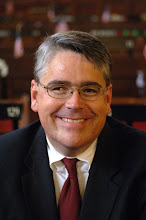
Greetings from CT State Representative David McCluskey (Democrat-West Hartford) !

I am serving my 6th term from the 20th District which is in the southern section of the town including Elmwood. This year, House Speaker Chris Donovan has appointed me to serve as one of his Deputy Speakers. In 2008, I sought re-election as a clean elections candidate, having served on Governor Rell's Public Financing Working Group.

I serve on the Environment, Finance, Legislative Managment and the Transportation Committees. I am also a member of the Transportation Bonding Subcommittee, which has worked to rebuild our public transportation system,focus on "fix it first" not new highways, roads and encourage bike and pedestrian travel, and coordinate land use/economic development/transportation development.

I am a progressive, pro-labor Democrat and thought I would use this blog to pass along news and views.

I will try to keep the site fresh with news/information and try to offer more commentary/observations on CT Politics & Government.